Unlocking Ocean Secrets: 7 Breakthroughs in Marine Genomics You Need to Know

webmaster

해양생물 유전체학 - Unlocking Deep-Sea Cures: The Pharmaceutical Scientist**

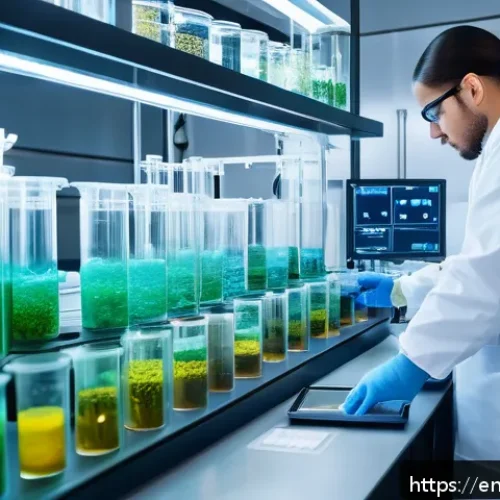
A highly detailed, ultra-realistic image o...

Hey there, amazing readers! Welcome back to my corner of the internet where we always dive deep into what’s truly shaping our world, right now and in the future.

If you’re anything like me, you love staying ahead of the curve, spotting those incredible trends before they go mainstream, and grabbing insights that genuinely make a difference.

I’m constantly sifting through mountains of information, experimenting with the latest tech, and talking to real experts to bring you content that isn’t just informative, but genuinely useful.

My goal? To spark your curiosity, empower your decisions, and maybe even show you a few surprising ways to level up your everyday. I truly believe that knowledge, especially the cutting-edge kind, should be accessible and exciting, not just a dry read.

So, get ready to explore topics that are not just trending, but truly transformative. I’ve always aimed to make this blog a reliable source, a place where you feel like you’re getting advice from a trusted friend who’s always got your back with the latest scoop and some real talk.

Imagine a world where the secrets of the ocean’s most mysterious creatures are unlocked, not by diving deep, but by analyzing their very building blocks.

Marine genomics isn’t just some abstract scientific term; it’s literally opening up entire new universes under the sea, revealing how life thrives in extreme conditions, offering clues for new medicines, and even helping us protect these vital ecosystems more effectively.

From tiny plankton to colossal whales, their DNA holds incredible stories about adaptation, evolution, and survival that we’re only just beginning to decipher.

It’s truly mind-blowing when you think about the potential. I personally find it fascinating how much we can learn about our planet’s future by looking at the genetics of its oldest inhabitants.

Ready to dive deeper into this breathtaking field? Let’s unlock the secrets of marine life and its vast implications, right now.

Unlocking Nature’s Deep-Sea Library

해양생물 유전체학 - Unlocking Deep-Sea Cures: The Pharmaceutical Scientist**

A highly detailed, ultra-realistic image o...

The Blueprint of Ocean Life

It’s absolutely wild to think about, but every single creature swimming in our vast oceans, from the tiniest microbe to the most enormous whale, carries an incredible story within its DNA.

This isn’t just some abstract scientific concept; it’s literally the blueprint of their lives, holding clues about how they survive, adapt, and interact with their environment.

I remember watching a documentary about deep-sea hydrothermal vents and being utterly captivated by the extremophiles thriving there. Scientists are now diving into the genomes of these organisms, and what they’re finding is just mind-blowing.

We’re talking about entirely new metabolic pathways and enzymes that could revolutionize industries on land. For me, it feels like we’re finally getting to read the ancient scrolls of our planet’s history, written in the language of genes.

It makes you realize just how much we still don’t know about our own world, and how much potential lies hidden beneath the waves. This genetic mapping is opening doors to understanding biodiversity at a level we could only dream of just a couple of decades ago, allowing us to see the intricate web of life with unprecedented clarity.

Why Every DNA Strand Matters

Every single strand of DNA from a marine organism is a treasure trove of information, and honestly, the more I learn about it, the more I’m convinced we’re just scratching the surface.

Think about it: these creatures have evolved over millions of years to thrive in conditions that would be lethal to most land-based life. Their genetic material holds the secrets to extreme adaptation – surviving immense pressure, freezing temperatures, complete darkness, or even highly acidic environments.

When scientists sequence the genome of a deep-sea fish, they’re not just identifying a species; they’re uncovering novel proteins, unique defense mechanisms, and pathways for energy production that could have profound implications for human health and technology.

I personally find it incredibly humbling to consider that the answers to some of our biggest challenges, from climate change resilience to new antibiotics, might be floating around in the ocean, encoded in DNA we haven’t even fully explored yet.

It’s like a cosmic library, and we’re finally learning how to read the books.

From Genes to Cures: Marine Life’s Medical Miracles

Pharmaceuticals from the Deep

This is where marine genomics truly gets exciting for us on a human level! Imagine finding the next breakthrough cancer drug or a potent new antibiotic not in a lab, but in a sponge living miles beneath the ocean’s surface.

It sounds like science fiction, doesn’t it? But it’s very much a reality. Marine organisms produce a dazzling array of unique biochemical compounds as part of their survival strategies – to deter predators, attract mates, or fight off infections.

Many of these compounds have incredibly powerful properties that are proving invaluable in medical research. I’ve been following the progress of some of these discoveries, and it’s truly awe-inspiring.

For instance, compounds derived from certain sea squirts have shown promise in treating various cancers, while others from marine bacteria are being investigated for their anti-inflammatory effects.

My personal take is that the ocean is the ultimate pharmacy, holding an untapped potential to revolutionize how we treat diseases, and marine genomics is the key that unlocks these hidden remedies.

It’s not just about identifying these compounds, but understanding the genetic pathways that produce them, which can then lead to sustainable production methods.

Tackling Diseases with Ocean-Born Solutions

The sheer diversity of life in the ocean means an equally diverse array of chemical compounds, many of which have no terrestrial counterparts. This makes marine organisms an unparalleled source for novel therapeutic agents.

I’ve read about research into venom from cone snails, which contains peptides that are thousands of times more potent than morphine for pain relief, but without the addictive qualities.

How incredible is that? Or the potential for antivirals from marine algae. What really resonates with me is the idea that these natural defenses, refined over millennia of evolution, are now being harnessed to tackle some of humanity’s most persistent health challenges.

From Alzheimer’s to antibiotic-resistant infections, the solutions might just be waiting in the deep. My own experience looking into this field has shown me that the patience and dedication of marine genomicists are truly paving the way for a healthier future.

It’s not a quick fix, but a sustained effort to meticulously map, understand, and then leverage these biological wonders.

Advertisement

Guardians of the Ocean: Genomics for Conservation

Protecting Endangered Species Through DNA

This is a topic that really tugs at my heartstrings, because it’s about giving a voice to the voiceless. Marine genomics offers powerful new tools for conservationists who are tirelessly working to protect our ocean’s vulnerable inhabitants.

By analyzing the DNA of endangered species like whales, sea turtles, or coral, scientists can do so much more than just count individuals. They can assess genetic diversity within populations, identify migration patterns, pinpoint poaching hotspots by tracking illegal trade, and even understand the genetic basis of resilience to environmental changes.

I recall reading about a project that used genetic markers to identify specific populations of whales, helping conservationists lobby for targeted protections in their breeding grounds.

It’s like giving these animals a unique genetic ID card, allowing us to understand their lives and needs in unprecedented detail. This kind of precise, data-driven conservation is absolutely essential in an era where so many marine species are facing unprecedented threats.

Monitoring Ocean Health from a Genetic Lens

It’s not just about individual species; marine genomics is also revolutionizing how we monitor the overall health of entire marine ecosystems. Environmental DNA, or eDNA, is a game-changer.

Imagine taking a simple water sample from the ocean and, by analyzing the tiny fragments of DNA shed by organisms living there, being able to tell which species are present, how diverse the ecosystem is, and even detect invasive species early on.

I’ve seen some truly fascinating projects using eDNA to track the recovery of coral reefs or monitor the presence of endangered fish without ever disturbing them.

It’s less intrusive, more comprehensive, and incredibly powerful. This “genetic snapshot” of an ecosystem provides immediate, vital data that helps inform conservation policies and marine protected area management.

For me, it’s a brilliant example of how cutting-edge science can provide tangible solutions to pressing environmental issues, giving us a far clearer picture of what’s happening beneath the surface than ever before.

It’s about proactive management rather than reactive damage control.

Decoding Evolution: A Peek into Ancient Waters

Tracing Life’s Origins Under the Waves

If you’re anything like me, you’ve probably wondered about the very beginnings of life on Earth. And guess what? The ocean holds a huge part of that story!

Marine genomics isn’t just about what’s happening now; it’s a powerful tool for peering back in time, tracing evolutionary lineages, and understanding how life diversified on our planet.

By comparing the genomes of various marine organisms, scientists can reconstruct ancient family trees, identify shared ancestors, and even estimate when different species diverged.

It’s like solving a massive, millennia-old puzzle. I always find it incredible to consider that some of the simplest marine organisms, like certain bacteria or archaea, might hold genetic clues to the earliest forms of life on Earth, predating complex multicellular organisms by billions of years.

This deep dive into evolutionary genomics helps us understand the fundamental processes that drive life itself, offering insights into how genetic changes lead to new forms and functions.

How Marine Organisms Adapt to Extremes

해양생물 유전체학 - Guardians of the Ocean: Genetic Conservation in Action**

An awe-inspiring, photorealistic underwate...

The ocean is full of extreme environments, from scorching hydrothermal vents to crushing abyssal plains and polar ice sheets. And yet, life flourishes in almost all of them.

How do they do it? Marine genomics is providing some truly astonishing answers. By sequencing the genomes of these extremophiles – organisms that thrive in conditions typically considered inhospitable – we can identify the specific genes and proteins that allow them to survive.

We’re talking about antifreeze proteins in Arctic fish, specialized enzymes in heat-loving bacteria, or unique cellular structures that withstand immense pressure.

I remember reading about a type of deep-sea worm whose hemoglobin is incredibly efficient at binding oxygen even in low-oxygen environments, a trait encoded directly in its genes.

These adaptations aren’t just fascinating; they offer incredible lessons for biotechnology, potentially inspiring new materials, industrial enzymes, or even strategies for human survival in challenging environments.

It’s a testament to nature’s incredible ingenuity, all written in the genetic code.

Advertisement

Beyond the Horizon: The Future of Blue Biotechnology

Sustainable Seafood and Aquaculture Innovations

Okay, let’s talk about how marine genomics is going to impact our dinner plates – and in a really good way! With global populations rising, the demand for seafood isn’t going anywhere, but overfishing is a massive problem.

This is where blue biotechnology, powered by genomics, steps in. We’re seeing incredible advancements in aquaculture, making it more sustainable and efficient.

Genomics helps us identify the genetic traits in farmed fish that lead to faster growth, disease resistance, and better nutritional content. This means we can breed healthier, more productive fish with less environmental impact, reducing the need for antibiotics and minimizing waste.

I’ve heard about fascinating research on salmon where genomic selection is dramatically improving their resilience to common diseases, which is a huge step forward for sustainable farming.

It’s about smart, science-backed choices to ensure that future generations can also enjoy delicious, healthy seafood without further depleting our wild stocks.

Energy and Materials from Marine Resources

The potential of marine genomics stretches far beyond medicine and food; it’s even reaching into how we power our lives and create new materials. Think about marine algae – these tiny powerhouses are being studied for their incredible efficiency in converting sunlight into biofuels, offering a promising alternative to fossil fuels.

Genomics helps scientists optimize these algae strains to maximize lipid production for biofuel or to produce other valuable compounds. And it doesn’t stop there.

Researchers are exploring marine organisms for novel biomaterials – imagine super-strong, lightweight materials inspired by mollusk shells, or self-healing polymers based on marine animal secretions.

I personally find this area incredibly exciting because it taps into the ocean’s vast biodiversity to create sustainable solutions for some of our planet’s most pressing resource and energy challenges.

It’s a vision of a future where our innovations are truly inspired by and in harmony with nature.

My Personal Dive into the Genomic Revolution

What Truly Amazes Me About This Field

Honestly, what truly gets me about marine genomics isn’t just the science itself, as cool as that is. It’s the sheer scope of possibilities it unlocks.

It’s like we’ve been given a universal translator for the language of life, and we’re just beginning to understand the stories these marine organisms have to tell.

From uncovering potential cures for human diseases to finding new ways to protect our planet’s most vital ecosystems, the impact is profound and far-reaching.

I remember speaking with a marine biologist who described sequencing a new species as “getting to read a brand new book that no one has ever opened before.” That image has stuck with me.

It’s the sense of discovery, of continuously pushing the boundaries of human knowledge, and of finding solutions in the most unexpected places. Every new gene sequence, every identified protein, feels like a little victory for both science and our shared future.

It’s a field that constantly reminds me of the intricate beauty and immense power of nature.

Real-World Impacts You Might Not Know

You might think marine genomics is just for scientists in labs, but its real-world impacts are already touching our lives in ways we might not even realize.

For example, the enzymes discovered in deep-sea extremophiles are being used in everyday industrial processes, from detergents that work effectively in cold water to biotechnological applications in textile manufacturing.

Or consider the insights gained into how marine organisms cope with pollution; these genetic studies are informing strategies for environmental remediation and managing waste.

It’s not always about a flashy new drug; sometimes it’s about making our everyday products more efficient or understanding subtle environmental shifts that affect fishing yields.

I’ve always been fascinated by how scientific breakthroughs trickle down into practical applications, and marine genomics is a prime example of this. It’s about improving our world in tangible ways, often behind the scenes, yet making a significant difference to our economy and well-being.

Application Area Key Genomic Contribution Potential Benefit
Drug Discovery Identification of novel bioactive compounds and their genetic pathways. New antibiotics, anti-cancer drugs, anti-inflammatory agents.
Conservation Genetic diversity assessment, eDNA monitoring, population tracking. Targeted protection for endangered species, improved ecosystem health monitoring.
Aquaculture Genetic selection for growth rate, disease resistance, nutritional value. More sustainable and efficient seafood production, reduced environmental impact.
Biotechnology Discovery of unique enzymes, proteins, and metabolic pathways. Biofuels, biomaterials, industrial enzymes for various applications.
Climate Change Research Understanding genetic adaptations to rising temperatures and ocean acidification. Insights for ecosystem resilience and mitigation strategies.
Advertisement

Wrapping Things Up

As we reach the end of our deep dive into marine genomics, I hope you’re feeling as inspired and amazed as I am by the sheer breadth of its potential. It’s truly incredible to consider that the answers to so many of humanity’s challenges, from health to sustainability, might be hidden in the genetic code of the ocean’s vast and mysterious inhabitants. This isn’t just science happening in some faraway lab; it’s a revolution that’s slowly but surely reshaping our understanding of life itself and offering tangible solutions for a better future. Keep an eye on this space, because I have a strong feeling the most exciting discoveries are still yet to come!

Useful Insights You’ll Want to Bookmark

Here are a few nuggets of information that I’ve picked up and always find myself coming back to when thinking about the incredible world of marine genomics:

1. Did you know that some of the most potent pain relievers currently in development are inspired by the venom of cone snails? These tiny marine creatures produce peptides that are thousands of times more powerful than morphine, without the addictive side effects. It’s a game-changer for chronic pain management, all thanks to a little mollusk from the deep! Just imagine the relief this could bring to so many people.

2. The concept of “eDNA” (environmental DNA) is truly revolutionary for conservation. Instead of trying to spot rare or elusive marine animals, scientists can now simply take a water sample. From that sample, they can detect the minuscule fragments of DNA that creatures naturally shed, giving them a detailed snapshot of what species are present in an ecosystem, without ever disturbing them. It’s like a CSI investigation for ocean biodiversity!

3. Marine microbes, often too small to see with the naked eye, are actually the most genetically diverse organisms on Earth and play a crucial role in global biogeochemical cycles. They hold an immense, largely untapped potential for discovering novel enzymes, antibiotics, and other bioactive compounds that could transform industries from medicine to biofuels. Their resilience in extreme conditions is a testament to evolution’s genius.

4. The process of “bioprospecting” in the ocean is rapidly expanding. This involves exploring marine environments for commercially valuable genetic and biochemical resources. While it sounds very technical, it simply means looking for nature’s hidden treasures—like a specific gene in a deep-sea bacterium that can help clean up oil spills, or a compound from a coral that protects against UV radiation. The possibilities are truly endless!

5. Understanding the genetic makeup of marine species is also incredibly vital for fighting illegal fishing and wildlife trafficking. By analyzing DNA from fish fillets or shark fins found in markets, experts can pinpoint their origin, track smuggling routes, and identify endangered species being illegally harvested. It offers a powerful forensic tool to protect our oceans from exploitation, giving justice to marine life. It’s about bringing accountability to the high seas.

Advertisement

Key Insights to Remember

Alright, if you take away just three things from our journey through marine genomics, let them be these: First, the ocean is an unparalleled library of genetic information, holding keys to everything from new medicines to understanding life’s origins. Second, marine genomics provides powerful, cutting-edge tools for conservation, allowing us to protect endangered species and monitor ecosystem health with unprecedented precision. And finally, the future of “blue biotechnology” is incredibly bright, promising sustainable solutions for food, energy, and materials that can benefit all of humanity. It’s a field brimming with wonder and practical applications, reminding us that there’s always more to explore beneath the waves.

Frequently Asked Questions (FAQ) 📖

Q: uestions

A: bout Marine Genomics

Q: What exactly is marine genomics and why should I care about it?

A: Okay, so imagine you have a giant instruction manual for every single living thing in the ocean, from the tiniest microbe to the biggest whale. Marine genomics is essentially the science of reading and understanding those instruction manuals – the genetic material (DNA and RNA) of marine organisms.
It’s like unlocking the secret code of ocean life. Why should you care? Well, I’ve personally seen how this field is revolutionizing our understanding of biodiversity, how species evolve, and how they adapt to their environment.
It gives us an unprecedented look at how marine life functions, responds to stress like climate change, and even contributes to the entire ocean ecosystem.
For me, it’s about connecting the dots between microscopic DNA and the health of our vast oceans – and that’s something that affects all of us, whether we live by the coast or thousands of miles inland!

Q: How does marine genomics specifically help us protect our oceans and the amazing creatures within them?

A: This is where it gets really exciting from a conservation perspective! From my experience, marine genomics provides tools we never had before. For example, scientists can now take a tiny water sample – literally just a scoop of ocean water – and analyze the “environmental DNA” (eDNA) left behind by organisms.
This tells us which species are present, even elusive or endangered ones, without disturbing them at all! Think about it: we can track endangered populations, detect invasive species early, and monitor overall ecosystem health with incredible accuracy.
It also helps us understand how species are genetically adapting (or struggling to adapt) to challenges like rising temperatures and ocean acidification.
This deep genetic insight empowers conservationists to make much smarter decisions about where to establish marine protected areas, how to manage fisheries sustainably, and how to restore damaged habitats.
It’s truly a game-changer for protecting our beautiful blue planet.

Q: Beyond just conservation, what other “cool” or surprising things can marine genomics do for us?

A: Oh, you are in for a treat with this one! While conservation is a huge piece of the puzzle, marine genomics offers so much more. What I find truly amazing is its potential in medicine and biotechnology.
The unique and often extreme conditions of the ocean have led marine organisms to evolve fascinating biological mechanisms and produce incredible compounds.
Researchers are using marine genomics to discover new drug candidates for diseases like cancer, develop novel antibiotics, and even find new enzymes for industrial applications.
It’s like the ocean is a giant, untapped pharmacy and biotech lab! We’re also seeing its application in sustainable aquaculture, helping to improve fish health and productivity.
And get this: by understanding how marine organisms create unique chemicals and materials, we can even get “bio-inspiration” for developing sustainable technologies for the future.
So, it’s not just about saving marine life, but also about discovering solutions from the ocean that can directly benefit human health and innovation.
The possibilities are genuinely endless!