Have you ever stopped to think about the incredible, often invisible, world teeming beneath the ocean’s surface? It’s a universe powered by tiny, drifting organisms – marine plankton.
From the microscopic diatoms that are the very foundation of marine food webs to the mesmerizing, bioluminescent dinoflagellates that light up our night shores, these unsung heroes dictate the health of our planet in ways we’re only just beginning to fully appreciate.
I’ve spent countless hours diving into this fascinating subject, and trust me, there’s so much more to them than meets the eye, especially with recent changes impacting their delicate balance.
Let’s delve into the intricate world of marine plankton, exploring their classifications and the vital ecological roles they play, and truly grasp why they’re so crucial to all life on Earth.
The Unseen Architects of Our Planet’s Breath
It’s easy to look at the vast expanse of the ocean and think of majestic whales, playful dolphins, or vibrant coral reefs. But what if I told you that the true powerhouses, the silent giants literally breathing life into our world, are almost entirely invisible to the naked eye?
For years, I’ve been absolutely fascinated by marine plankton, these minuscule organisms that drift through our oceans. It really hit me when I first understood that over half of the oxygen we breathe, the very air in our lungs, comes from these microscopic beings.
Think about that for a moment – every second breath you take is a direct gift from a world you can’t even see! Their ability to perform photosynthesis on such a grand scale, collectively surpassing even the mightiest rainforests, is nothing short of miraculous.
Without them, our atmosphere would be vastly different, and the complex web of marine life we cherish simply wouldn’t exist. My own journey into understanding these incredible organisms has truly changed how I view our planet, making me realize just how interconnected everything truly is, from the smallest diatom to the largest blue whale.
This isn’t just a biological fact; it’s a profound realization about the delicate balance of life on Earth.
Unveiling the Oxygen Producers
When we talk about the oxygen revolution on Earth, we often think of plants on land. However, the unsung heroes of this ancient and ongoing process are overwhelmingly marine phytoplankton.
These microscopic algae, like diatoms and dinoflagellates, capture sunlight and convert carbon dioxide into oxygen, much like terrestrial plants. What’s truly mind-boggling is the sheer volume of this production.
Estimates suggest that phytoplankton contribute between 50% and 80% of the oxygen in our atmosphere. This means that a significant portion of the air you’re breathing right now was produced by a tiny, drifting organism in the ocean.
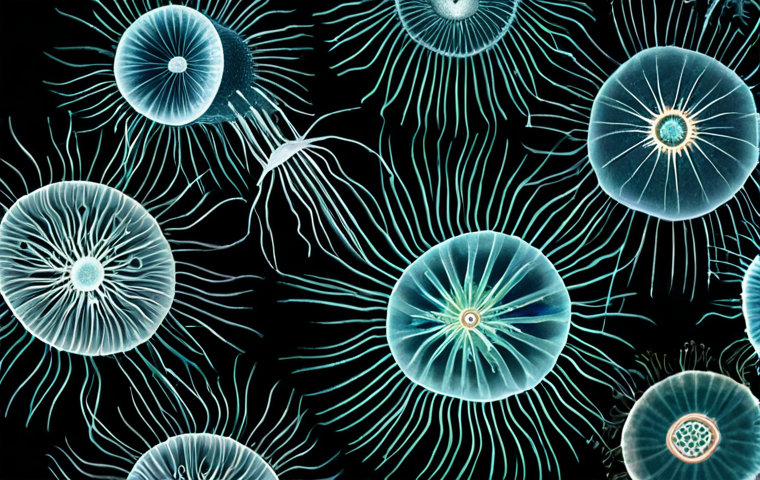
My personal experience, spending hours poring over images from electron microscopes, has shown me the incredible diversity and intricate beauty of these single-celled powerhouses, each a miniature factory churning out life-sustaining gas.
It’s a powerful reminder that size has absolutely nothing to do with impact when it comes to the natural world.
The Global Climate Regulators
Beyond oxygen production, marine plankton play an absolutely critical role in regulating our planet’s climate. They are, in essence, a massive global carbon pump.
As phytoplankton photosynthesize, they draw vast amounts of carbon dioxide from the atmosphere into the ocean. When they die, or are eaten by zooplankton, this carbon can sink to the deep ocean, effectively removing it from the active carbon cycle for hundreds or even thousands of years.
This process, often referred to as the “biological pump,” is a primary mechanism by which the ocean sequesters carbon and helps mitigate the effects of global warming.
From my perspective, observing how scientists are actively studying these cycles, it’s clear that understanding and protecting plankton populations is paramount not just for marine ecosystems, but for the health and stability of our entire global climate system.
We often talk about large-scale solutions for climate change, but the tiny plankton are already doing an immense amount of work.
Diving Deeper: Classifying the Ocean’s Tiny Titans
When you first hear the word “plankton,” you might picture a homogenous mass, a sort of undifferentiated soup of microscopic life. However, nothing could be further from the truth!
The world of marine plankton is incredibly diverse, boasting an astonishing array of shapes, sizes, and life strategies. It’s like looking into a bustling underwater metropolis, each inhabitant playing a specific, vital role.
From the plant-like phytoplankton that harness the sun’s energy to the animal-like zooplankton that graze on them, and even the bacteria and viruses that comprise the bacterioplankton and virioplankton, there’s a fascinating hierarchy and interconnectedness.
Over the years, I’ve found myself absolutely captivated by the intricate differences, even among organisms that seem so similar at first glance. It’s a universe of specialized roles, evolutionary adaptations, and stunning biodiversity, each group contributing uniquely to the ocean’s intricate balance.
It truly forces you to appreciate the complexity that exists even at the smallest scales, far beyond what any casual observer might imagine.
Phytoplankton: The Ocean’s Primary Producers
Phytoplankton are the microscopic plant-like organisms that form the base of almost all marine food webs. These include diatoms, with their intricately patterned silica cell walls, and dinoflagellates, often recognized by their two flagella that allow for limited movement.
They are the primary producers, using sunlight to convert carbon dioxide and water into organic compounds and oxygen through photosynthesis. Without phytoplankton, the entire ocean food chain would collapse.
I remember observing samples under a microscope during a marine biology workshop; the sheer variety and delicate beauty of these organisms, each a tiny solar-powered factory, was genuinely awe-inspiring.
Their seasonal blooms are so extensive they can be seen from space, painting vast swathes of the ocean with their vibrant colors, a testament to their enormous collective power.
Zooplankton: The Ocean’s Microscopic Consumers
Following the phytoplankton in the food web are the zooplankton, which are tiny animal-like organisms that drift through the water column. This incredibly diverse group includes everything from copepods, which are tiny crustaceans, to the larval stages of fish, crabs, and even larger marine animals like jellyfish.
They are the primary consumers, grazing on phytoplankton and, in turn, becoming a crucial food source for larger marine animals. I once spent a summer volunteering at a marine research lab, and the sheer volume of zooplankton collected in a single net tow was astounding.
You’d see tiny, almost translucent creatures darting around, each one a miniature predator or grazer. Their daily vertical migrations, moving towards the surface at night to feed and sinking during the day to avoid predators, represent the largest animal migration on Earth in terms of biomass, a truly mind-boggling phenomenon that constantly reminds me of the hidden dramas unfolding beneath the waves.
Bacterioplankton and Virioplankton: The Decomposers and Regulators
While often overlooked in popular discussions, bacterioplankton and virioplankton are absolutely fundamental to ocean health. Bacterioplankton are microscopic bacteria and archaea that play crucial roles in nutrient cycling, breaking down organic matter and returning essential nutrients to the water column for phytoplankton to use.
Virioplankton, or marine viruses, are incredibly abundant and influence plankton communities by infecting and lysing (breaking open) other planktonic organisms, thereby regulating their populations and recycling nutrients.
From my professional encounters with marine microbiologists, it’s clear that these invisible components are the ocean’s recycling crew and population controllers.
They ensure that precious resources are continually circulated, maintaining the ocean’s delicate balance and productivity, showing that even the smallest life forms are integral to the grand scheme.
The Ocean’s Pantry: How Plankton Fuel the Food Web
Imagine the world’s largest buffet, but instead of elaborate dishes, it’s an endless supply of microscopic morsels drifting through a vast, blue expanse.
That’s essentially what the ocean is for countless creatures, and marine plankton are the main course, the foundational ingredient in this immense culinary landscape.
From the smallest krill to the largest baleen whales, nearly every organism in the marine environment relies, directly or indirectly, on the energy initially captured by phytoplankton.
It’s a classic case of “eat or be eaten” on a truly epic scale, starting with these tiny, almost imperceptible organisms. When I started truly understanding the complexities of the marine food web, it was this realization – that everything ultimately stems from plankton – that really solidified their critical importance.
It’s not just about providing food; it’s about channeling energy through an incredibly efficient, albeit sometimes brutal, system that sustains all higher life forms in the ocean.
Without this constant supply from the bottom, the entire magnificent structure of marine biodiversity would simply crumble.
From Microscopic Algae to Megafauna
The journey of energy through the marine food web begins with phytoplankton. These primary producers convert sunlight into chemical energy. Zooplankton, the primary consumers, graze on these phytoplankton.
This transfer of energy is the first crucial step. Then, small fish and invertebrates consume the zooplankton. These smaller creatures are, in turn, eaten by larger fish, seals, and eventually apex predators like sharks or marine birds.
Even the largest animals on Earth, like baleen whales, are direct consumers of vast quantities of zooplankton, particularly krill, which themselves feed on phytoplankton.
It’s a beautifully intricate system, a true testament to nature’s efficiency, where the energy captured by a single-celled organism can eventually power the movements of a massive whale.
I often think of it as a biological pyramid, with plankton forming an unimaginably wide and sturdy base, supporting everything above it.
The Role of Krill: A Critical Link
Among zooplankton, krill stand out as particularly important. These small, shrimp-like crustaceans are prolific filter feeders, consuming vast amounts of phytoplankton.
They form dense swarms that can stretch for miles, making them a super-abundant food source. Krill are a cornerstone of the Southern Ocean ecosystem, being the primary diet for baleen whales, seals, penguins, and many species of fish.
Their abundance directly impacts the health and population sizes of these iconic Antarctic animals. From my perspective, having followed conservation efforts in the Antarctic, the reliance of so many species on krill highlights just how sensitive these ecosystems are to changes in plankton populations.
Any significant decline in krill, often linked to changes in phytoplankton due to ocean warming, sends ripple effects throughout the entire food web, demonstrating how a small creature can hold such immense power over an entire region.
More Than Just Food: Plankton’s Surprising Ecological Roles
While their role as the base of the food web is undeniably paramount, marine plankton are far from one-trick ponies. They contribute to the ocean’s health and functioning in a myriad of other, often overlooked, ways.
It’s like discovering that a humble brick isn’t just for building walls, but also for insulation, soundproofing, and even art! These tiny organisms are active participants in global biogeochemical cycles, influencing everything from the availability of nutrients to the very chemistry of seawater.
Through my explorations into marine science, I’ve found that the more you learn about plankton, the more you realize their influence extends far beyond simply being sustenance.
They are engineers, chemists, and climate modifiers all rolled into one microscopic package, constantly shaping the environment around them in profound and complex ways that we are still working to fully unravel.
Their silent, tireless work underpins the stability and productivity of our blue planet, making them true unsung heroes of the natural world.
Nutrient Cycling Maestros
Plankton are central to the cycling of essential nutrients in the ocean, including nitrogen, phosphorus, and silicon. Phytoplankton absorb these nutrients from the surface waters to grow.
When plankton die or are excreted by zooplankton, their organic matter sinks, carrying these nutrients to deeper waters. Decomposers, primarily bacterioplankton, then break down this organic material, releasing the nutrients back into the water column.
This process, known as nutrient regeneration, is vital for sustaining future plankton blooms. Without this continuous recycling, surface waters would quickly become depleted of vital nutrients, severely limiting primary production.
It’s an elegant system of resource management, ensuring that nothing is truly wasted and that the building blocks of life are constantly made available, a continuous loop that underpins ocean productivity.
Biogeochemical Engineers of the Deep
The “biological pump” mentioned earlier isn’t just about carbon; it also profoundly impacts the distribution of other elements throughout the ocean. As plankton remove nutrients from the surface and transport them to the deep ocean, they create distinct chemical gradients.
This vertical transport influences ocean chemistry, acidity, and even the formation of deep-sea sediments. For instance, the silica shells of diatoms contribute to the formation of vast diatomaceous earth deposits over geological timescales.
This biological engineering by tiny plankton literally shapes the geology of our planet. It’s absolutely fascinating to think that these minuscule beings have such a monumental, long-term impact on Earth’s physical structure and chemical composition, operating on scales that dwarf our human constructs.
Here’s a quick overview of some key plankton types and their primary roles:
| Plankton Type | Primary Classification | Key Role(s) | Examples |
|---|---|---|---|
| Phytoplankton | Autotrophic (Plant-like) | Primary production, oxygen generation, carbon sequestration | Diatoms, Dinoflagellates, Coccolithophores |
| Zooplankton | Heterotrophic (Animal-like) | Primary and secondary consumers, energy transfer, food source for larger animals | Copepods, Krill, Larval Fish, Foraminifera |
| Bacterioplankton | Prokaryotic (Bacteria/Archaea) | Nutrient recycling, decomposition of organic matter, remineralization | Cyanobacteria, Heterotrophic bacteria |
| Virioplankton | Non-living (Viruses) | Population control, nutrient cycling (cell lysis), genetic transfer | Bacteriophages, Algal viruses |
When the Balance Shifts: Threats to Plankton Populations
It truly saddens me to consider the increasing pressures on these vital microscopic communities. The ocean, despite its vastness, is not immune to human impact, and plankton populations are feeling the brunt of it.
We often talk about large-scale environmental issues, but it’s the subtle, cumulative changes impacting these tiny organisms that can have the most devastating, far-reaching consequences.
Think about it: if the foundation of a magnificent skyscraper begins to crack, the entire structure is eventually jeopardized. That’s precisely what’s happening with our plankton.
From personal discussions with marine scientists, the consensus is clear: ocean warming, acidification, and pollution are not just abstract threats; they are actively reshaping planktonic ecosystems, often with unpredictable and potentially catastrophic outcomes.
It’s a stark reminder that even the most resilient natural systems have breaking points, and we are pushing the very limits of our ocean’s capacity to sustain life as we know it.
The Silent Scourge: Ocean Warming
One of the most immediate and pervasive threats to marine plankton is ocean warming. As ocean temperatures rise due to climate change, it directly impacts the metabolic rates, growth, and distribution of various plankton species.
For instance, some phytoplankton thrive in cooler waters, and as their habitats warm, they are forced to migrate or face decline. This shift can disrupt the delicate balance of food webs, as zooplankton and other organisms that rely on specific phytoplankton species may find their food sources diminished or unavailable.
I’ve heard researchers express deep concern about the potential for “trophic cascades,” where a change at the plankton level ripples all the way up to affect fish stocks and marine mammals.
It’s a slow, insidious change that could fundamentally alter the productivity of entire ocean regions, reducing the abundance of life from the bottom up.
Ocean Acidification: A Corrosive Threat
Another major concern is ocean acidification, which is driven by the ocean absorbing increasing amounts of atmospheric carbon dioxide. This leads to a decrease in seawater pH, making the ocean more acidic.
Many plankton species, particularly coccolithophores and foraminifera, construct their shells or skeletons from calcium carbonate. An increase in ocean acidity makes it harder for these organisms to form and maintain their calcium carbonate structures, potentially dissolving existing ones.
This is akin to trying to build a house with dissolving bricks. I’ve seen images of acidified plankton shells under a microscope, and the damage is visibly clear, a stark visual representation of this invisible threat.
The consequences for these foundational species could be dire, impacting their survival and, by extension, the entire food web and the ocean’s ability to sequester carbon.
Pollution’s Perilous Impact
Beyond climate-related threats, various forms of pollution also pose significant risks to plankton. Nutrient runoff from agricultural lands, for example, can lead to excessive phytoplankton growth, known as harmful algal blooms (HABs) or “red tides.” While some phytoplankton are beneficial, these blooms can produce toxins that harm marine life, including fish, marine mammals, and even humans who consume contaminated seafood.
Plastic pollution is another major issue; microplastics, tiny fragments of plastic, can be ingested by zooplankton, transferring harmful chemicals up the food chain.
From personal observations near coastal areas, the visible impact of pollution is disturbing enough, but the invisible chemical and microplastic contamination at the plankton level is arguably even more concerning due to its widespread and foundational effect on the entire ecosystem.
Cutting-Edge Research: Unlocking Plankton’s Secrets
It’s truly inspiring to see the incredible advancements in marine science dedicated to understanding our planktonic heroes. For a long time, studying these microscopic, ephemeral organisms felt like trying to grasp smoke.
But thanks to innovative technologies and dedicated researchers, we are now gaining unprecedented insights into their lives, their vulnerabilities, and their immense potential.
Every new discovery feels like uncovering another piece of an incredibly complex, vital puzzle. I’ve always been drawn to the ingenuity of scientific exploration, and the field of plankton research is absolutely brimming with it.
From automated underwater vehicles to advanced genetic sequencing, scientists are pushing the boundaries of what’s possible, providing us with a clearer picture of these unseen worlds and their profound influence on our planet.
It gives me immense hope that as our understanding deepens, so too will our capacity to protect these critical ecosystems.
Autonomous Observatories and Remote Sensing
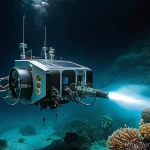
Scientists are increasingly deploying autonomous underwater vehicles (AUVs) and robotic floats equipped with specialized sensors to monitor plankton populations in real-time and across vast ocean expanses.
These technologies can measure chlorophyll levels (an indicator of phytoplankton biomass), ocean temperature, salinity, and even particle size distributions.
Satellite remote sensing also plays a crucial role, allowing researchers to track large-scale phytoplankton blooms from space. This combination of in-situ (on-site) and remote observations provides an unparalleled view of plankton dynamics, helping us understand their responses to environmental changes.
I recall seeing animated visualizations of global chlorophyll data from satellites, and it truly brings home the dynamic, ever-changing nature of these widespread communities, a living, breathing pulse of the ocean.
Genomics and Molecular Ecology
The advent of genomics and molecular techniques has revolutionized plankton research. Scientists can now analyze the DNA and RNA of plankton communities to identify species, assess their genetic diversity, and understand their metabolic capabilities.
Metagenomic studies, for example, involve sequencing all the genetic material in an environmental sample, revealing the hidden diversity of bacterioplankton and virioplankton that cannot be cultured in the lab.
These molecular approaches are helping us unravel complex microbial food webs, identify novel genes, and predict how plankton might adapt to future ocean conditions.
It feels like we’ve gone from simply observing the tip of the iceberg to truly understanding the vast, complex ecosystem beneath the surface, revealing the intricate genetic machinery that drives these tiny life forms.
What We Can Do: Protecting Our Microscopic Marvels
After delving into the incredible world of marine plankton and understanding their profound importance, it’s natural to feel a sense of urgency. These tiny organisms are the bedrock of our planet’s health, and their well-being is intrinsically linked to our own.
So, what can we, as individuals and as a collective, actually *do* to help protect these microscopic marvels? It’s easy to feel overwhelmed by the scale of ocean issues, but every action, no matter how small, contributes to a larger positive impact.
From my own journey, what I’ve learned is that awareness is the first crucial step, followed by tangible changes in our daily lives and advocating for broader systemic shifts.
It’s about being a responsible steward of our planet, understanding that the health of the unseen plankton directly dictates the vibrancy of the ocean and, ultimately, the air we breathe and the food we eat.
Let’s make a conscious effort to support the silent heroes of our blue planet.
Reducing Our Carbon Footprint
Perhaps the most impactful action we can take is to reduce our individual and collective carbon footprint. Since ocean warming and acidification are primarily driven by greenhouse gas emissions, mitigating climate change directly benefits plankton.
This means embracing renewable energy sources, reducing energy consumption in our homes and transportation, and supporting policies that promote a low-carbon economy.
Every time we choose to walk, bike, use public transport, or opt for energy-efficient appliances, we’re making a small but meaningful contribution to lessening the burden on our oceans and the plankton within them.
It might seem like a drop in the ocean, but collective action truly does make waves.
Supporting Sustainable Practices and Research
Beyond individual actions, supporting sustainable practices and marine research is vital. This includes choosing sustainably sourced seafood to minimize overfishing, which can indirectly impact plankton populations by altering food web dynamics.
Advocating for stronger regulations against pollution, particularly nutrient runoff and plastic waste, is also crucial. Furthermore, supporting organizations and scientific initiatives dedicated to ocean conservation and plankton research provides the resources needed to better understand and protect these ecosystems.
Contributing to these efforts, whether through donations, volunteering, or simply spreading awareness, helps ensure that the vital work of understanding and protecting our microscopic marvels can continue.
Educating Ourselves and Others
Finally, and perhaps most importantly, is the power of education and advocacy. The more people who understand the critical role of marine plankton, the more likely we are to see widespread change.
Share what you’ve learned about these tiny, yet mighty, organisms with friends, family, and your community. Engage in discussions about ocean health and climate change.
By becoming an informed advocate, you contribute to a growing movement that values and protects our marine environments. My own passion for this topic stems from continuous learning, and I truly believe that fostering curiosity and knowledge about the ocean’s smallest inhabitants is one of the most powerful tools we have for ensuring their future, and by extension, our own.
Wrapping Up Our Deep Dive
Wow, what a journey we’ve had, exploring the incredible, often unseen, world of marine plankton! It truly is mind-boggling to think that these minuscule organisms, drifting silently beneath the waves, are the very foundation of life on Earth, providing the oxygen we breathe and regulating our climate. My hope is that this deep dive has sparked a new sense of wonder and appreciation for these tiny titans within you, just as it has for me over the years. Remember, the ocean’s health is intrinsically linked to our own, and every small action we take to protect it ripples through this magnificent, interconnected system. Let’s champion these microscopic marvels, because their future is, quite literally, our future.
Useful Tidbits to Ponder
As we close the chapter on our plankton exploration, I wanted to share a few extra bits of information that have always stuck with me, and I think you’ll find them just as fascinating and perhaps even inspiring. These are the kinds of facts that truly make you think about the delicate dance of nature and our place within it. I’ve found that the more I know, the more empowered I feel to make a difference, and I hope these insights give you that same boost of clarity and motivation!
1. The Ocean’s “Lung”: Next time you take a breath, imagine that at least every second one is thanks to marine phytoplankton! These tiny organisms collectively produce more oxygen than all the world’s rainforests combined, making them the planet’s most vital oxygen source. It’s a humbling thought, isn’t it?
2. Climate Control Specialists: Beyond oxygen, plankton are carbon sequestration champions. Through the “biological pump,” they draw vast amounts of carbon dioxide from the atmosphere and transport it to the deep ocean, playing a monumental role in buffering us from the full impacts of climate change. They are truly the ocean’s unsung climate engineers.
3. Microplastics’ Macro Problem: It breaks my heart to know that microplastics are being ingested by zooplankton, becoming an unwelcome part of the marine food web from its very base. Choosing reusable options and reducing your plastic consumption is a powerful step in protecting these vital organisms from this pervasive pollutant.
4. The Power of Nutrient Recycling: Plankton aren’t just consumers and producers; they’re also master recyclers. When plankton die, bacterioplankton tirelessly break down their organic matter, returning essential nutrients like nitrogen and phosphorus back to the water column, ensuring the continuous cycle of life in the ocean. It’s an incredibly efficient system!
5. Support Ocean Research: If you’re as captivated as I am by these microscopic marvels, consider supporting organizations dedicated to marine research and conservation. From tracking plankton blooms via satellites to studying their genetics, scientists are constantly uncovering new secrets, and their work is crucial for our understanding and protection of the global ocean. Every bit of support helps them continue their invaluable efforts.
Key Takeaways
If there’s one thing I hope you remember from our time together, it’s just how profoundly important marine plankton are to every single one of us, even if we never see them. They’re not just tiny specks in the ocean; they are the fundamental life force of our blue planet, performing critical roles that directly impact our daily lives. From the air we breathe and the climate we depend on, to the intricate food webs that sustain marine life, plankton are truly the unseen architects of our world. My own experiences, both in learning and sharing, have solidified my belief that understanding these microscopic powerhouses is the first step towards protecting them.
But here’s the crucial bit: these vital communities are under immense pressure. Ocean warming is shifting their habitats, acidification is dissolving their protective shells, and pollution, especially microplastics, is contaminating their world. These aren’t just abstract scientific problems; they are immediate threats to the very stability of our planet’s most critical ecosystems. However, the good news is that groundbreaking research is constantly revealing new insights, equipping us with the knowledge to make a difference. We each have a role to play, from reducing our carbon footprint and supporting sustainable practices to simply spreading awareness. Let’s collectively commit to being better stewards of our oceans, because the health of these microscopic marvels directly dictates the vibrancy and future of all life on Earth, including our own. Let’s protect them, for us, for the planet, and for generations to come!
Frequently Asked Questions (FAQ) 📖
Q: What exactly are marine plankton, and how do scientists usually classify them?
A: I remember when I first started learning about marine life, the term “plankton” felt so incredibly vague, didn’t it? But trust me, it’s a universe in itself!
Essentially, marine plankton are a vast and wonderfully diverse collection of organisms – both microscopic plants and animals – that can’t swim against the ocean’s currents.
Their name even comes from the Greek word for “drifter,” which perfectly describes their lifestyle. We broadly categorize them into two main groups, and understanding this helps unlock their secrets.
First, we have phytoplankton. These are like the tiny, photosynthetic plants of the ocean, using sunlight to produce their own food, just like trees and grass on land!
Think diatoms and dinoflagellates – they’re the base of almost all marine food webs. Then there’s zooplankton. These are the tiny animals, ranging from microscopic crustaceans like copepods to the larval stages of fish, crabs, and even jellyfish.
They graze on phytoplankton or even other zooplankton, moving energy up the food chain. It’s truly mind-blowing to think about this entire hidden world, constantly drifting and driving the planet’s biggest ecosystem.
Q: Beyond being food, what vital ecological roles do these tiny plankton play in our world?
A: This is where it gets really interesting, and frankly, a bit sobering when you realize their immense, often overlooked, impact. From my perspective, marine plankton are the absolute bedrock of nearly all marine ecosystems.
They’re not just ‘fish food’; they’re the original energy source, the primary producers that literally power the entire ocean. Without phytoplankton, there would be no food for zooplankton, which means no food for small fish, and then no food for bigger fish, whales, and ultimately, yes, us!
It’s a classic food web, but it all starts with these microscopic drifters. Beyond that, and this is truly crucial, they play a colossal role in regulating our planet’s climate.
Phytoplankton absorb massive amounts of carbon dioxide from the atmosphere during photosynthesis, much like terrestrial forests do. When they die, a significant portion of this carbon sinks to the deep ocean, effectively removing it from the atmosphere.
This process, often called the “biological pump,” is a critical natural carbon sink. I’ve often thought about how these tiny organisms are doing more heavy lifting for our climate than many human-led initiatives combined!
Q: You mentioned recent changes impacting their delicate balance. What are these changes, and what kind of consequences are we starting to see?
A: Oh, this is the part that honestly keeps me up at night, because the delicate balance of plankton is indeed under threat from several angles, predominantly due to human activity.
The two biggest culprits I’ve observed and read about extensively are ocean warming and ocean acidification. As our oceans absorb more heat from the atmosphere, these rising temperatures can drastically disrupt the growth cycles, reproductive patterns, and geographic distribution of many plankton species.
Some thrive in warmer waters, others absolutely do not, leading to significant shifts in populations that ripple through the entire marine food web. Then there’s ocean acidification.
As the oceans absorb increasing amounts of CO2, their pH drops, making them more acidic. This is particularly devastating for plankton species that build shells or skeletons out of calcium carbonate, like coccolithophores.
Their ability to form and maintain these protective structures is severely hampered – it’s like trying to build a house when your bricks are dissolving around you!
From my personal observations and countless scientific reports, the potential consequences are dire: widespread disruptions to marine food webs, reduced fish stocks affecting global fisheries, and a diminished capacity for the ocean to absorb atmospheric carbon, which only accelerates climate change.
It’s a stark reminder that what happens with these tiny drifters truly impacts every single one of us, far beyond the ocean’s edge.
📚 References
Wikipedia Encyclopedia
구글 검색 결과
구글 검색 결과
구글 검색 결과
구글 검색 결과
구글 검색 결과